
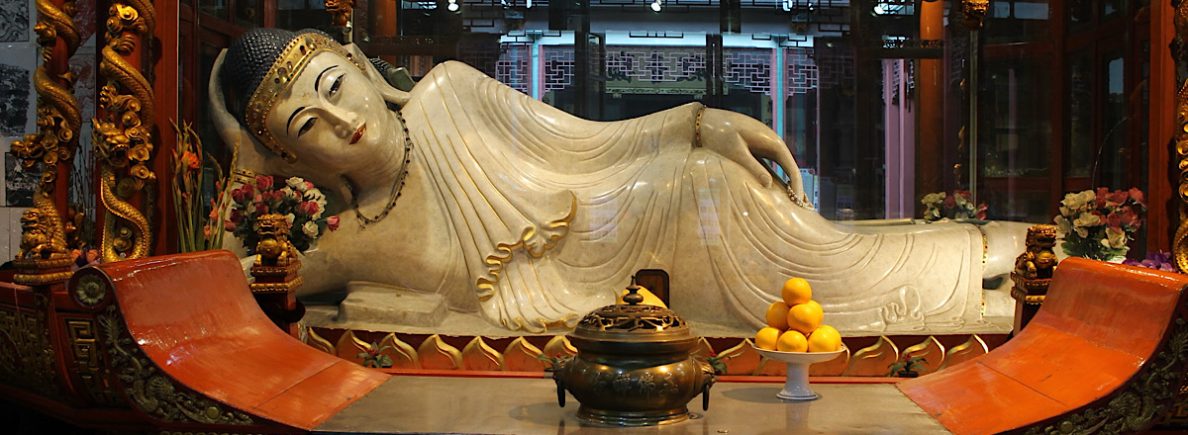

Since returning from Nepal, I have noticed a gradual but definite change in myself.
Not dramatic.
Not sudden.
More a persistent feeling carried quietly through daily life.
And it has led me repeatedly toward one particular question:
Are spirituality and wellbeing really the same thing, or is one simply part of the other?
I find myself uncertain.
Spirituality as Something Felt
Spirituality, at least in my own experience, feels difficult to define clearly.
It is less a task and more a presence:
something inward,
something carried quietly,
something connected to meaning, awareness, and the way we experience life itself.
Following the teachings of the Gautama Buddha has increasingly become part of that feeling for me.
Not as belief alone, but as observation:
paying attention,
watching the mind,
trying to live more ethically and mindfully.
The experience feels deeply personal and difficult to measure.
Wellbeing as Structure
Wellbeing, on the other hand, seems more structured.
It often appears as routine:
habits,
disciplines,
practices,
activities intended to improve physical or mental balance.
Since returning from my pilgrimage, I have become increasingly aware of my own daily structure:
- two meditation sessions each day
- walking slowly each morning
- mindful gardening
- reflecting on the Dharma I already know
- writing this blog to clarify observations and experiences
- weekly yoga
- regular massage
These activities undoubtedly contribute to wellbeing.
But are they also spirituality?
Or are they simply creating conditions in which spirituality becomes more noticeable?
Meditation Between Two Worlds
My meditation practice seems to sit somewhere between the two.
Within modern culture, meditation is often presented primarily as:
- relaxation
- stress reduction
- anxiety management
And it certainly can help with these things.
But my own practice is rooted in Buddhism rather than self-improvement alone.
Meditation, for me, is not primarily about relaxation.
Relaxation is often a side effect.
The deeper intention is to follow the Dharma:
to observe the mind,
to understand suffering more clearly,
and to explore the nature of existence through direct experience.
That feels closer to spirituality than wellbeing.
And yet, it undeniably improves wellbeing too.
Does the Distinction Matter?
Part of me wonders whether the distinction is important at all.
Yet the question continues to occupy my thoughts.
Perhaps because modern wellbeing culture often focuses heavily on optimisation:
better sleep,
better routines,
better productivity,
better emotional regulation.
Spirituality feels different.
Less about improvement.
More about understanding.
Less about performance.
More about observation.
The Absence of Sangha
One thing I increasingly notice is the absence of a local sangha:
a community with whom these reflections could be explored more directly.
Perhaps that is partly why writing has become important to me.
This blog is gradually becoming not simply a place to record experiences, but also a place to examine questions that remain unresolved.
And maybe unresolved questions are not always a problem.
Sometimes they are the beginning of deeper observation.
So I remain uncertain:
Is wellbeing part of spirituality?
Or is spirituality simply another aspect of wellbeing?
I genuinely do not know.
But the question itself feels worth contemplating.
Spirituality, by your definition, seems very familiar.
However I don’t particularly aim to pin things down; almost anything that we can say about our worldview (to use a very broad term) is bound to fall short of the boundless. I moved away from conventional religious observances and beliefs decades ago, finding them unhelpful – obscuring an open path when they should have illuminated it. Buddhism is not immune from that tendency.
So my journey too has become a personal one, but not one I find helpful to try and measure. Like you, I would value a local sangha, but my household contains the kernel of one and for that I am grateful. Wellbeing emerges as a property of living a balanced life (and does not require ideal circumstances) – I increasingly believe that its foundation lies in equanimity.
I am enjoying exploring your writing and ideas.
Hello Clive, thank you so much for your most thoughtful comment 🙏 I have found it very rare to get a feeling of “engagement” as I sense in your comment.
I moved away from Christian Methodism many years ago because of the ritualism and imposed scary belief system. Not easy because I grew up in a chapel owned house!
But I would respectfully disagree about Buddhism “obscuring an open path instead of illuminating it”. This is closer to setting Buddhism as a religion to be believed as opposed to Buddha’s statement to “Come and see for yourself, don’t just believe what you are told”.
I have browsed your recipe blog, very extensive….. my late mum would have loved it! I will find some of her favourites and comment 🙏
Glad you are enjoying my writing and thanks again for your comment. Keep them coming I will always reply.
Another post going out in a couple of hours 🙏🕉️
I didn’t mean to imply that Buddhism necessarily obscures an open path – just that in certain of its traditions it can sometimes seem to, perhaps. I feel the closest affinity to the way of Zen – and try quite hard not to ‘believe’ anything at all, but to ‘come and see’.
Thank you for your subscription to my recipe blog – I did wonder whether you had mistaken it for my reflections on Buddhism, but the recipes are probably altogether more useful.
Like you, I turned from Christianity (Anglo-Catholicism, in my case) but my current home is a developing space. I have tried to ‘set out my stall’ to some degree (really to help me see where I am, and the direction of travel – rather an indulgence), in the short series of reflections that begin here: https://nothingmuch07.wordpress.com/2026/03/11/ground/
🤣🤣 I’ve done this with other blogs too. Can you reply with a link to your Buddhism blog and I’ll follow.
You can click on this link ..
https://meditationwithpraveen.wordpress.com/
That works but how the other one arose I have no idea 🙏
I changed my blog name dear .
“Such a gentle and thought-provoking read. Your insights always feel like a quiet, refreshing pause in a busy day. Thank you for sharing your journey!
Thank you so much Praveen you have encapsulated my approach to writing about my Buddhist life experiences. I try hard to be gentle and thought provoking in all of my posts, not preaching or teaching, just sharing my inward observations as the Buddha asked us to be 🙏🕉️
“It is truly a privilege to connect with another traveler on this path, Dr B. Your words resonate deeply with me—there is such a unique power in simply sharing our inward observations without the need to preach. I am honored that my post felt like a reflection of your own approach. Let us keep sharing these quiet, honest glimpses into our experiences.”
Apologies, my subscription to your blog as disappeared and I’m connecting to this https://vibrantvitality.wordpress.com
No dear …my blog is (Meditation with Praveen)
The concept of “spirituality” varies with individual interpretation. For me, spirituality signifies a connection to the Holy Spirit, which represents the power of God. This connection is fundamental to my identity as a spiritual being inhabiting a physical form.
Some individuals may identify as spiritual while perceiving their connection to the cosmos or the universe, which they view as their primary source of spirituality. However, I maintain that the universe is a created entity, distinct from God. Therefore, according to my definition, true spiritual connectivity stems not from the universe, but from a relationship with the source that generated it.
When one’s spirit receives counsel, guidance, and edification from the Holy Spirit, it contributes to overall well-being by aligning with the principles established by God in the Bible. Living in accordance with these principles, through the influence of the Holy Spirit, integrates these values into one’s being, ultimately resulting in overall well-being. This represents an absolute truth.
Well !! Knowing self or say visiting inwards, observe your thoughts and being aware in every moments is spirituality.However, one of the major tool to observe yourself is meditation to gain that spirituality and every minute of being spiritual will lead to our wellbeing physically and mentally 🙏that’s what I think it’s interconnected 😀🌹
I feel they are connected and not the same thing. It’s possible for example to be a very spiritual person but lacking in wellbeing. So, a Buddhist or Hindu who overeats, doesn’t exercise, argues, too much alcohol etc etc.