
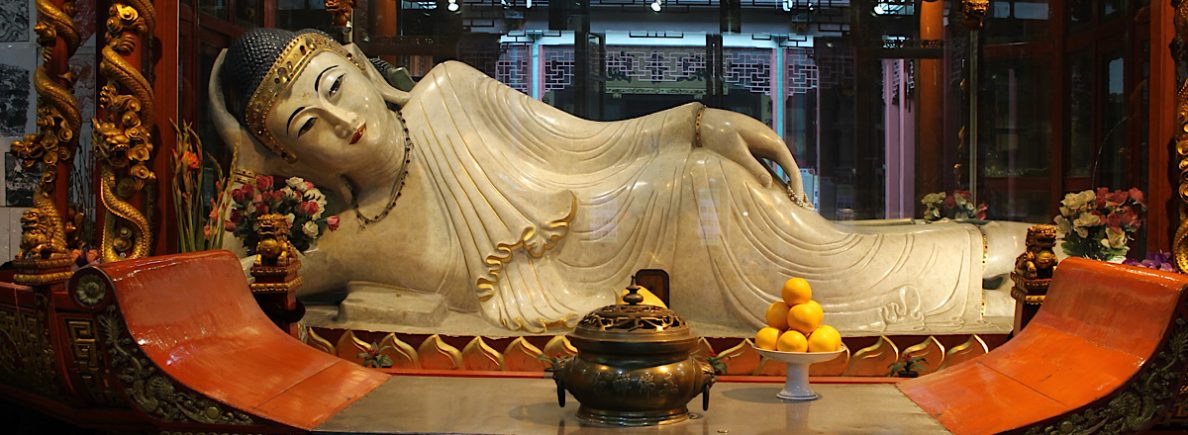

I have recently changed my Buddhist meditation space at home.
The change came after several weeks of reflecting on why my meditation practice had started to feel mechanical, restless, and strangely uncomfortable.
For the first time in many years, meditation began to feel forced.
Something was clearly wrong.
Being a fairly logical and systematic person, I approached the problem as I usually do:
by sitting down with my journal and trying honestly to examine possible causes.
Why had this happened?
Did I need to identify the exact cause?
Should I reduce the duration of meditation?
Meditate only once each day?
Focus only on breathing?
Return to chanting?
Observe thoughts more openly?
Or perhaps the problem was not meditation itself at all.
Perhaps the space had changed emotionally without me fully noticing.
The Purpose of the Space
I eventually decided to begin not with meditation techniques, but with the space itself.
This led me toward an important realisation:
understanding the purpose of a meditation space matters far more than decoration or appearance.
For me, the purpose is entirely Buddhist.
The room is not intended simply for relaxation or stress reduction.
It is a place to sit quietly with the Dharma:
to contemplate Buddhist teachings,
to observe thoughts and emotions,
and to cultivate mindfulness and concentration within ordinary life.
The simplicity of the room therefore became essential.
“Better than a thousand hollow words is one word that brings peace”
The Dhammapada
Simplicity and Atmosphere
I wanted the space to feel:
clean,
orderly,
quiet,
and free from unnecessary distraction.
Natural light mattered enormously.
So did reducing clutter and noise.
I realised how strongly atmosphere influences the mind before meditation even begins.
The room itself quietly shapes attention.
I also recognised that I prefer variety in posture during meditation, so the room needed flexibility:
a chair,
a meditation cushion,
and space to sit or lie comfortably on a mat.
Gradually the room began to feel calmer again.

The Buddhist Elements
But there was another important aspect too:
ritual.
Not ritual in a superstitious sense,
but ritual as intentional preparation.
At the centre of the room I recreated a simple altar:
a small Buddha statue,
a candle,
an incense holder,
flowers or a small plant,
and a small vessel of water.
These objects help transform the room from an ordinary space into a contemplative one.
The Buddha image provides a focus for prostration, chanting, and recollection of the Dharma.
The remaining objects symbolise several of the traditional elements upon which life depends:
earth,
air,
fire,
and water.
During my pilgrimage to Nepal, I became increasingly aware of how such simple ritual objects help create mindfulness through atmosphere, repetition, and intention.
Bringing these elements into my home meditation room reconnects me with that experience.
Simplifying the Mind
I have also simplified the structure of meditation itself.
Previously I had become too regimented:
moving rigidly between different meditation themes every ten minutes according to a gong timer.
Instead, I now allow the meditation to flow more naturally across the full session.
Sometimes attention settles on the breath.
Or sometimes mindfulness of thoughts and feelings arises naturally.
Occasionally contemplation of Buddhist teachings appears spontaneously.
The practice feels less mechanical now.
More alive.
No Success or Failure
Most importantly, I am trying to observe this entire process without judging it as either success or failure.
Meditation changes.
The mind changes.
Atmosphere changes.
Practice evolves.
Perhaps creating a meditation space is not really about constructing the perfect room.
Perhaps it is about continually creating the conditions that gently support awareness, stillness, and presence.
And maybe that process itself is part of the practice.
I suggest simplicity in everything. In mind, action,and life. Meditation is not special moments in life. It’s living life. May you be well and happy.