
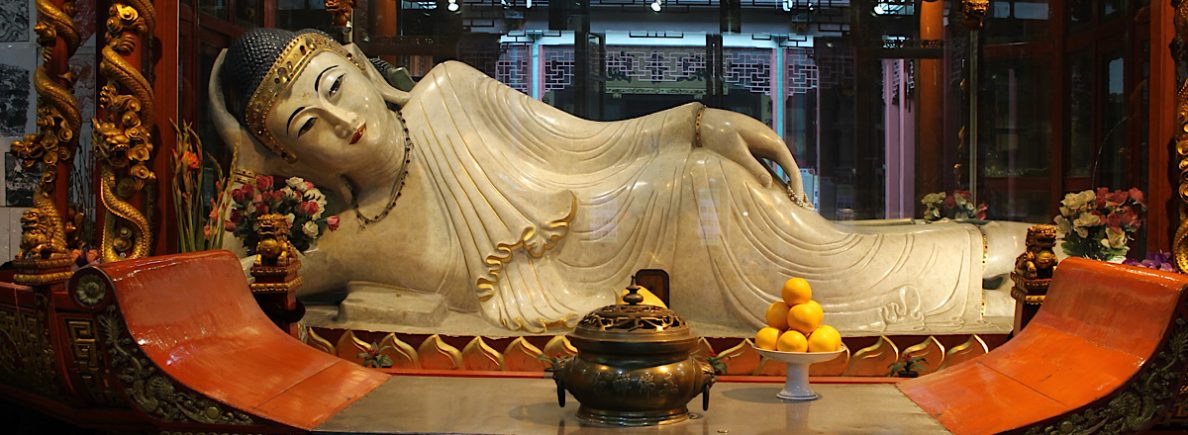

My recent pilgrimage to Nepal did not end when I returned home.
In many ways, it began here.
What I had observed in temples and monasteries—simple acts of devotion, quiet attention, and shared practice—has gradually found its way into my daily life through paying attention to my meditation space and structure. Not as something recreated, but as something continued.
A Daily Structure
Meditation now takes place twice each day.
Morning at 7:00am.
Afternoon at 3:00pm.
Each session lasts around forty minutes.
This structure matters. I have always been a person who benefits from discipline, and without it, practice can easily become irregular. Consistency, more than intensity, has become the foundation.
There is still restlessness at times. The mind does not always settle easily.
As a friend once said to me, “you think too much—relax.”
Perhaps that is true.
And perhaps this is exactly why the practice continues.
Two Spaces, Two Qualities
There are two meditation spaces and structures where I practice.
One is a room inside the house.
The other is a small summer house at the bottom of the garden, surrounded by trees and flowers.
Each space brings a different quality of attention.
The Room Inside
Here, the focus tends to be more contained.
Practice often centres on:
- mettā (loving-kindness)
- repetition of a Buddha mantra
- contemplation of aspects of the Dhamma
At times this includes reflection on:
- the five aggregates
- the five hindrances
But always with the same intention:
to look inward, and to observe directly.
The Garden Room

The garden has a different character.
There is more openness, more movement—light, air, and sound.
Here, the focus often shifts toward:
- the four foundations of mindfulness
- the three marks of existence
- the five elements
- the observation of non-self
These are not approached as ideas to understand, but as experiences to notice.
The natural surroundings seem to support this more easily.
SimpleRitual, Quiet Support
From my time in Nepal, I have also brought back small elements of temple practice.
In both spaces, there is a simple arrangement:
- a statue of the Gautama Buddha
- a candle or lamp
- incense
- a small offering of water
- flowers
These are not used as formal ritual, but as a way of settling the mind.
Lighting a candle, placing incense—these small acts create a pause before sitting. A shift from activity into attention.
Effort, Mindfulness, Concentration
Over time, the structure of practice has begun to reflect what is described in the Noble Eightfold Path—particularly the aspects of:
- right effort
- right mindfulness
- right concentration
Not as something to follow precisely, but as something that gradually becomes visible through practice itself.
Sangha, Near and Distant
One thing that is less present in daily life here is sangha.
There are few others nearby with whom to share practice.
And yet, during my pilgrimage in Nepal, there was a strong sense of it:
- in temples
- in monasteries
- in the quiet presence of others following the same path
That sense does not disappear entirely on returning home.
It remains, in a quieter form.
Continuing The Invitation
What has changed most is not the structure, or the setting.
It is the way of looking.
The teachings of Ehipassiko—”come and see”—continue to shape this.
Not as something to understand intellectually, but as something to return to, again and again, in direct experience.
At home, in a room, or in the garden, the same invitation remains.
”Come and See”, A Personal Commitment
What ultimately deepened my commitment was the Buddha’s invitation to “come and see” (ehipassiko). Not to believe blindly, but to experience directly.
It is through this that I fully committed to:
- The Buddha
- The Dhamma
- The Sangha
While there is little local Sangha where I live, my pilgrimage changed that feeling.
Time to connect What Does “Come and See” Really Mean in Daily Life
Time To Connect 👉 A Buddhist Pilgrimage in Nepal
Your own words are a blessing to my writing thank you so much 🙏🕉️🌹
Impressive!!!! 🌹May your practice of ehipassiko deepens your mindfulness in every action that leads towards more peace and enlightenment 🙏🧘♀️
Thank you🙏 Your words are felt in a true spirit of the Buddha. I am truly blessed 🙏🕉️