
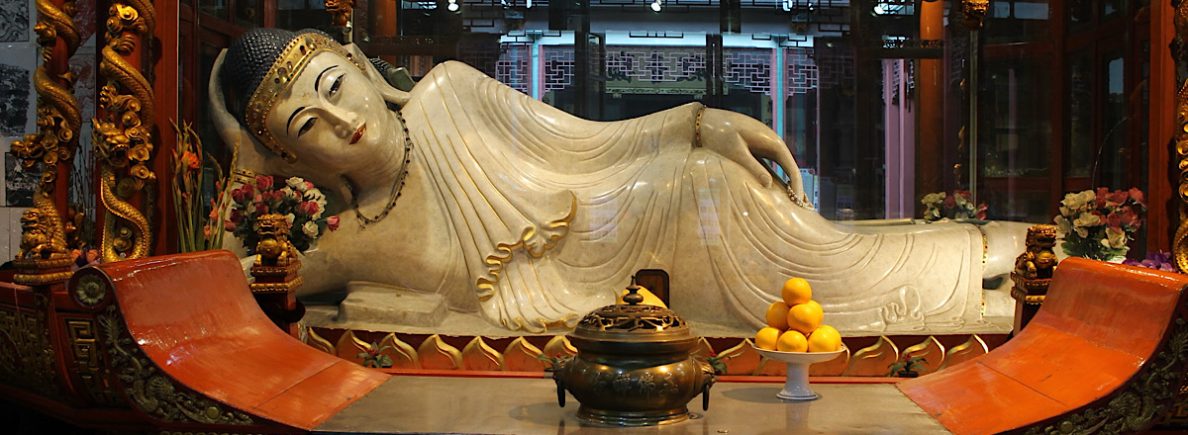

In Buddhism there is a traditional commitment recited by devotees across many different traditions:
“I take refuge in the Buddha, the Dharma, and the Sangha.”
These are known as the Three Jewels:
the teacher,
the teaching,
and the community.
The words “taking refuge” are deeply symbolic. Refuge means shelter, protection, or a safe place during difficulty and uncertainty. Buddhists therefore seek refuge not in a god or creator, but in the example of the Buddha, the truth of his teachings, and the support of fellow practitioners walking the same path.
At the beginning of every meditation session I silently repeat this commitment three times.
“I take refuge in the Buddha, the Dharma, and the Sangha.”
But increasingly I have found myself reflecting deeply on the third element:
the Sangha.
Traditionally, the sangha refers to the Buddhist community:
monks,
nuns,
teachers,
and fellow practitioners who support one another spiritually through shared practice, ethical living, and encouragement.
And here lies my difficulty.
I do not really have a sangha.
At least not in the traditional sense.
There is no nearby Buddhist monastery in my daily life.
No regular meditation group.
No community of practitioners with whom I can quietly discuss the Dharma over tea or sit together in meditation.
“Admirable friendship, admiral companionship, admiral camaraderie is actually the whole of holy life”
Upaddha Sutta

Yet during my recent pilgrimage to Nepal, I experienced the feeling of sangha everywhere.
Inside temples and monasteries.
Walking around stupas at dawn.
Sitting among monks chanting sutras.
Sharing silence with complete strangers inside sacred places.
Even in ordinary cafés and hotels there existed a quiet sense of shared understanding:
that Buddhism was not simply an individual belief system, but part of the surrounding culture and daily life itself.
I felt connected.
Not necessarily through conversation,
but through presence.
And returning home to England after such an experience created an unexpected feeling of loss.
That sense of community vanished almost overnight.
I miss it deeply.
Perhaps this longing itself reveals something important about sangha.
Maybe sangha is not only formal membership of a Buddhist group.
Perhaps it is also the feeling of walking beside others who are trying, imperfectly, to live mindfully and ethically within the realities of ordinary life.
The older I become, the more I realise how important spiritual companionship may actually be.
Not to provide answers,
but to provide encouragement,
shared silence,
and gentle reminders of the path itself.
And perhaps this is why sacred places in Nepal affected me so deeply:
for a short period of time I no longer felt spiritually alone.
Even now, when I quietly recite:
“I take refuge in the Buddha, the Dharma, and the Sangha,”
the third refuge still feels partly aspirational.
Something longed for,
remembered,
and still being searched for.
What would your ideal sangha look like? Would regular contact with the monastic community help your practice? Do you feel that you would benefit from a channel of formal teaching? Is your greatest need or desire for that (lay) community of practitioners with whom I can quietly discuss the Dharma over tea or sit together in meditation?
I too lack membership of a formal sangha – and I’ve never felt that online groups have very much to offer (but are, perhaps, better than nothing). It’s seems strange to me that the Three Jewels are so central to traditional practice and yet, there seem to be very few groups in most parts of England. Is it something to do with our native reserve – or are there just not really very many of us?
Good question Clive. I definitely relate everything I wrote to my recent time in Nepal. Although I spent a lot of time with a close friend who is a Hindu but also practices Buddhist rituals at temples and personal meditation, visiting temples every day for 18 days was revealing as well as rewarding. Being alongside other Buddhists who were also spinning the prayer wheels, lighting incense, lighting butter lamps, bowing before the Buddha was an uplifting experience in its own right. I also have relatives in Kathmandu who I visited for meals or just “conversation”, so I think it was “immersion” in an environment of day to day spiritualism that gave me a sense of Sangha. I also spent 5 days at Lumbini the birthplace of Gautama sitting in a couple of temples each day. So ………… I don’t believe that having a sangha in England is possible! Occasional contact online, local meetings etc will never replicate the feeling of sangha in Nepal where everyone has respect for temples, festivals, rituals, and holy days and each others religion or tradition. 🕉️🙏🕉️