
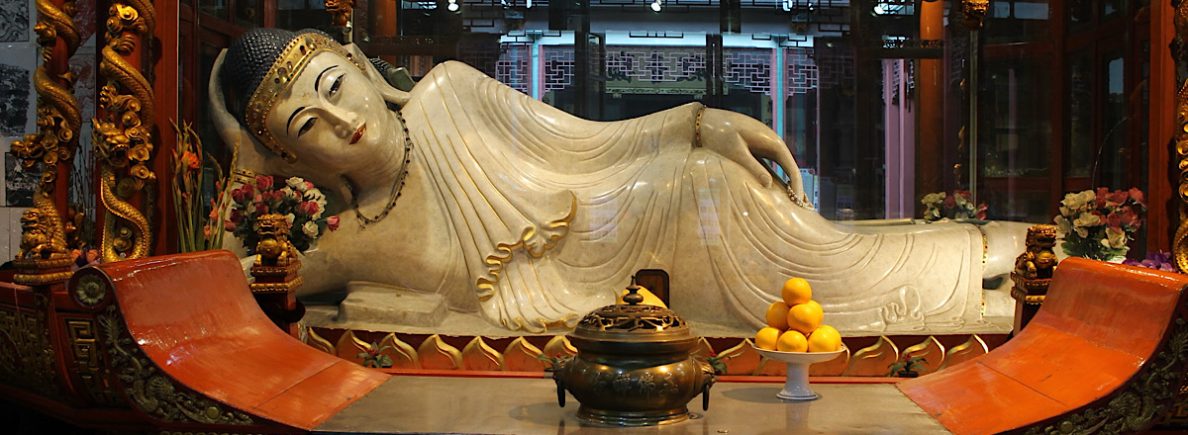

“Come and see.”
-The Buddha
During my recent pilgrimage to Nepal, I found myself being asked a question that I had never really considered before.
“What Buddhist tradition do you follow?”
At first, I wasn’t sure how to answer.
Over three weeks I spent fourteen days in Kathmandu and four days in Lumbini, the birthplace of the Buddha. I meditated in temples, monasteries and the Peace Park, visited sacred sites, and spoke with family, friends and people I met along the way. Some were Buddhist, others Hindu, yet all were generous in sharing something of their beliefs and practice.
People lit candles and butter lamps.
I saw offerings of flowers and water.
Mantras were quietly whispered
I noticed bowed heads, folded hands and shoes left respectfully outside temple doors.
As I asked questions, I gradually began to understand the subtle differences between the Theravada Buddhism practice, as well as Mahayana and Vajrayana traditions too.
The more I observed, the more I began reflecting on my own practice.
Looking at My Own Path
For more than thirty years I have never had a guru or a resident teacher.
Instead, my understanding has developed slowly through reading, meditation, pilgrimage, observation and reflection.
When I recently applied to attend a Buddhist retreat in the UK, I was asked “what is your current Buddhist tradition?”.
As I wrote my reply, something unexpected happened.
Without intending to label myself, I realised that my practice already had a clear shape.
My guidance comes primarily from:
- The Four Noble Truths
- The Noble Eightfold Path
- The Three Marks of Existence
My daily practice includes:
- Two forty-minute meditation sessions combining samatha and vipassanā
- Living according to the Five Precepts
- Reflecting on karma in everyday life
- Reading the Buddha’s discourses together with modern commentaries
- Writing this blog as part of my own continuing reflection
As I looked at those elements together, it became obvious that my practice sits most naturally within the Theravada tradition.
I had not consciously chosen it.
It had quietly emerged over many years.
An Unexpected Conversation
Recognising this also led to an interesting discussion with the organisers of the retreat.
Would the retreat complement my existing practice?
Would it broaden my understanding?
Or might it pull me in a different direction?
After much thought, I decided not to attend.
It felt like the right decision for me at this stage.
But Then Another Question Arose…
If my own practice is clearly Theravada…
…am I somehow misunderstanding the Buddha’s invitation to “come and see” by continuing to learn from Mahayana, Vajrayana or other Buddhist traditions?
The more I reflected on this, the more I realised that these are two different questions.
One concerns where my own practice has found its home.
The other concerns whether I should remain curious.
For me, they are not opposites.
Knowing where I stand gives me the confidence to appreciate other traditions without feeling that I must continually redefine my own.
When I read Thích Nhất Hạnh, I am enriched by his insight.
When I admire the symbolism of Tibetan prayer flags or meditate in a Vajrayana monastery, I am grateful for the experience.
None of this diminishes my own path.
If anything, it deepens my respect for the richness of the Buddha’s teaching.
My Reflection
Perhaps the Buddha’s invitation to come and see is not an invitation to keep changing paths.
Perhaps it is an invitation to keep looking deeply.
For me, that looking has led me naturally towards the Theravada tradition.
Yet it has also taught me to approach every sincere expression of the Dharma with humility, gratitude and an open mind.
After all, the aim is not to belong to a tradition.
The aim is to reduce suffering, cultivate wisdom and live with compassion.
Everything else is a means towards that end.
There is No Karma, No Fate, No Destiny
Nisargadatta Maharaj
https://youtu.be/1iMvCEmpD_M?si=Ko7dtMSWbWUSy4tT
Oh yes there is.